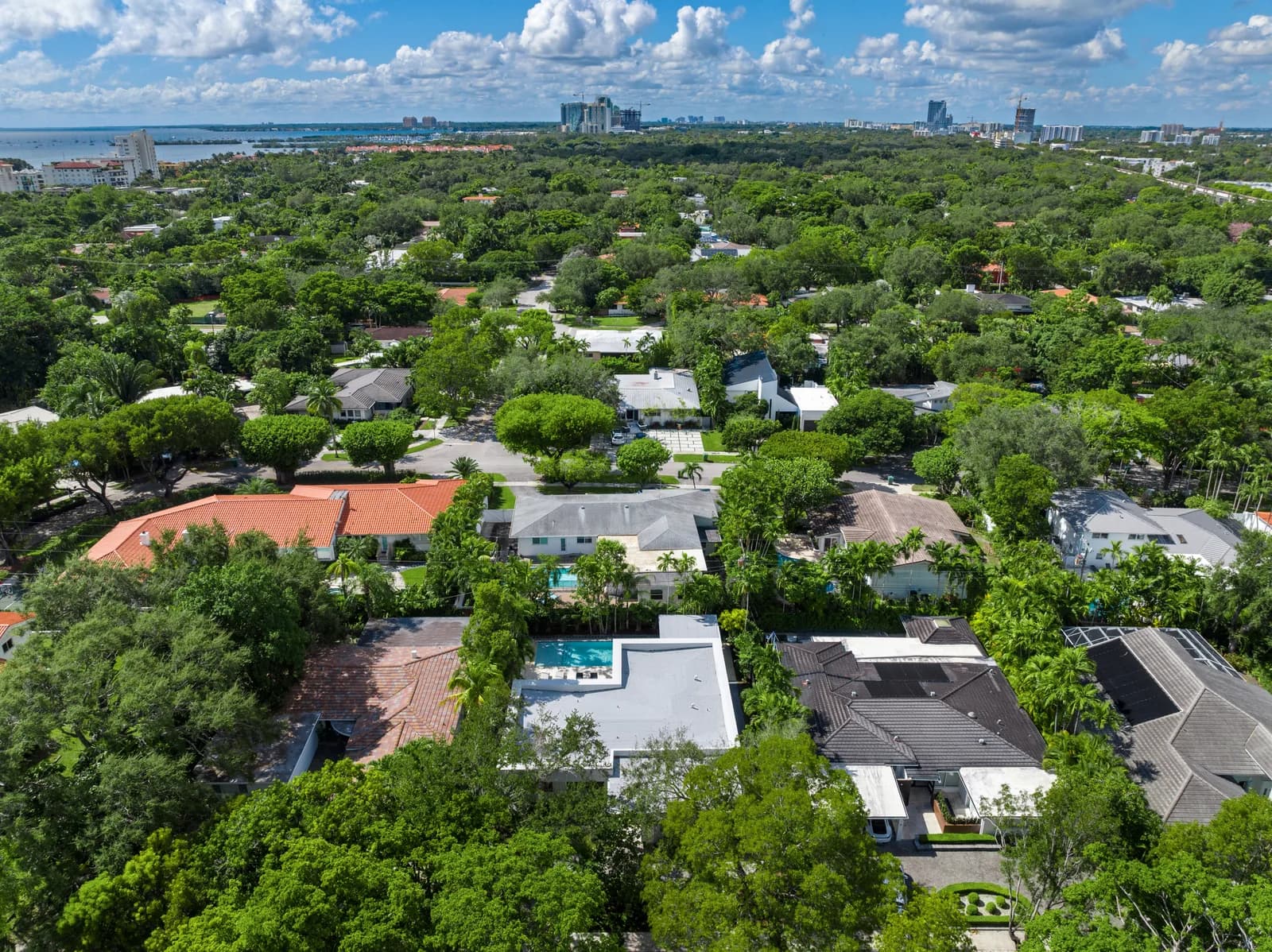
Read the Zoning Before You Read the Listing
The listing price tells you what someone thinks the lot is worth. Zoning tells you what the lot is actually allowed to become: height, setbacks, density. Read it first and the numbers start to make sense together.
Luxom Studio · LUXOM Developments
· 7 min read · Last reviewed
Key takeaways
- Zoning, not the listing price, sets the ceiling on what a lot can become: height, setbacks and lot coverage decide the buildable envelope before a single floor plan gets drawn.
- A property's zoning category is public record. Pulling it before you make an offer is the same five minutes of work every time, and it tells you more than the listing photos do.
- Setback and coverage rules are not the same block to block, or even city to city: Coconut Grove allows more lot coverage in some designations than Coral Gables permits at all.
- A Neighborhood Conservation District overlay adds a second layer of restrictions on top of base zoning, on demolition, materials and scale, that a buyer has to check separately.
- Zoning is not fixed. Miami approved moving on a setback change in 2026 that reshapes what gets built next to single-family lots on some corridors, which means the rules under offer today can shift before you break ground.
From the studio
We posted something short recently: read the zoning before you read the listing. It got the kind of comments a good rule of thumb usually gets, people asking what that actually means in practice. So here is the fuller version, the one we run before we ever put in an offer on a Coconut Grove lot.
Zoning is not fine print. It is the first fact about a piece of land, before the price, before the photos, before anyone has drawn a single wall.
Zoning is the cheat code, not the fine print
A house can be redesigned. A lot's zoning entitlements cannot, at least not without a public process. That is what actually sets the ceiling on a deal.
Zoning decides what a lot is allowed to become, not the asking price
What zoning actually decides about a lot before you buy it is simple to state and easy to skip: a listing price is one person's opinion of what a piece of land is worth, and zoning is a fact about what that land is legally allowed to become. That includes how tall a structure can rise on it, how much of the lot a building can cover, how far it has to sit back from each property line, and in some designations, how many units it could support. None of that is negotiable the way a price is. A buyer can talk a seller down. A buyer cannot talk a zoning code into allowing a fourth story it does not permit.
That is the actual value of reading zoning first. It tells you what the land will let you build before the listing tells you what somebody thinks that building is worth. Two lots that look the same from the street can carry different zoning, which means the same asking price can be a very different deal depending on which lot it is attached to.
Start with the lot's real zoning category and designation
Where to pull a lot's real zoning category and designation is the first move, and it is mechanical, not strategic: find out what the lot is actually zoned. The City of Miami runs a property lookup tool through its Planning, Zoning and Land Use pages that returns a property's zoning category directly from the address, available on miami.gov. It takes a few minutes, and every other question in this guide, height, coverage, setbacks, reads off whatever category that lookup returns.
Skipping this step and going by what the neighboring houses look like is the most common way a buyer misreads a lot. Two adjacent parcels can carry different designations, especially near a district boundary or an overlay edge, and a builder who assumes the lot next door's rules apply is pricing the deal on the wrong numbers before it even starts.
Height and lot coverage set the buildable envelope before any floor plan does
Reading height limits and lot coverage against a specific lot comes right after the designation is confirmed. Height and lot coverage are the two numbers that set the actual envelope a house has to fit inside. A common Coconut Grove residential designation, T3-R under the Miami 21 code, typically limits height to two stories, or 25 feet above base flood elevation, and caps lot coverage around 50 percent on the ground floor and 30 percent on the second floor.
Those figures are not a citywide constant, and that gap is exactly where a lot's real value hides. Coconut Grove allows lot coverage up to roughly 80 percent in some designations, while a city like Coral Gables limits coverage to around 45 to 48 percent. A buyer comparing two lots by price per square foot alone, without checking which coverage rule applies to each, is comparing numbers that do not mean the same thing.
Pull quote
The listing tells you what a house is asking for. The zoning tells you what the land will actually let you build. Read the second one first.
Setbacks are the real buildable footprint, and they are not fixed
Reading setbacks to find the real buildable footprint is the next step. Height and coverage set the ceiling and the floor area. Setbacks set the shape: how far a structure has to sit back from the front, side and rear property lines before anything can be built. A large lot with generous setback requirements on three sides can end up with a smaller usable footprint than a modest lot with a more forgiving setback rule, which is why the lot size on paper is never the whole story.
Setbacks are also not permanently fixed, and 2026 is a live example of that. Miami's mayor sponsored an ordinance to eliminate an extra setback buffer currently required between mid- and high-rise buildings, five stories or more, and adjacent single-family homes, on corridors that include central business district edges, major thoroughfares and parts of South Bayshore Drive; the city's Planning, Zoning and Appeals Board approved the change unanimously and forwarded it to the City Commission. A buyer who checks the setback rule the week they make an offer and never looks again can find that rule has moved by the time the deal closes.
The Neighborhood Conservation District overlay is a second layer on top of base zoning
The Neighborhood Conservation District overlay and what it adds on top of base zoning is the layer buyers most often miss. Base zoning is not the only rule that can apply to a lot. Coconut Grove has Neighborhood Conservation District, or NCD, overlays layered over parts of the base zoning map, and they add their own restrictions, most often on demolition, exterior materials and how a new structure has to relate to the scale of what is already on the block. A lot's base designation can permit something that its NCD overlay narrows further, and the two have to be checked as separate questions, not assumed to say the same thing.
This is the step buyers skip most often, because it does not show up in the same lookup as the base zoning category. It is worth confirming directly with the city's planning department, or with whoever is running due diligence on the deal, before treating any base zoning number as the final word on what the lot allows.
The reading order a developer runs before making an offer
Why zoning is not fixed and can move while a deal is in due diligence is the reason this whole reading order exists in the first place, not just as a checklist but as a sequence. Put together, the order matters more than knowing any single rule in isolation. Confirm the zoning category first. Read height and lot coverage against the actual lot dimensions to find the real buildable envelope. Check setbacks on all sides, including whether any proposed changes are moving through the city that could affect that specific block. Then check for an NCD overlay layered on top of all of it. Only after that sequence does a floor plan, and a real number for what the lot is worth, start to make sense.
Skip the order and the risk is not that a deal falls apart loudly. It is that a lot gets bought at a price that assumed a building envelope the zoning never actually allowed, and that mistake does not show up until the design is already underway. Read the zoning before you read the listing, and the listing starts to make a lot more sense.
If you are evaluating a lot in Coconut Grove, our services page walks through how we underwrite a site before we buy it, and the contact page is the place to start a scoped conversation. Once the zoning question is settled, our breakdown of land assemblage and lot split economics cover what the same zoning math means when a deal involves more than one parcel, our piece on where luxury developers make money explains why this acquisition-stage discipline is where the margin on a deal actually gets set, and our acre versus hectare guide covers the companion step of measuring the lot correctly before you read what the zoning allows on it.
Pull quote
The listing tells you what a house is asking for. The zoning tells you what the land will actually let you build. Read the second one first.
Filed under
Questions about how to read a Coconut Grove lot's zoning before buying it
01What does zoning actually control on a lot before anyone designs a house for it?
Zoning sets the boundaries a house has to be designed inside of, not the other way around. It controls the maximum height, how much of the lot the building footprint can cover, how far the structure has to sit back from each property line, and in some designations, how many units the lot could support. All of that gets fixed before a floor plan exists. A lot can look identical to the one next door and still allow a different building, because the zoning underneath each one is not always the same.
02Where do you actually check a property's zoning designation before making an offer?
The City of Miami publishes a property lookup tool that returns a lot's zoning category directly from its address, through the Planning, Zoning and Land Use section of miami.gov. That single lookup is the starting point for every other question in this guide: height, setbacks and coverage all read off the category it returns, and it takes a few minutes before an offer goes in, not after.
03How do height limits and lot coverage work on a typical Coconut Grove residential lot?
A common Coconut Grove residential designation, T3-R under Miami 21, typically limits height to two stories, or 25 feet above the base flood elevation, and caps lot coverage around 50 percent on the ground floor and 30 percent on the second floor. Those numbers are not universal across Miami. Coconut Grove allows lot coverage up to roughly 80 percent in some designations, while Coral Gables limits it to around 45 to 48 percent, which is the kind of gap that changes what a given lot is actually worth to build on.
04What is a Neighborhood Conservation District overlay, and does it apply on top of base zoning?
Yes. A Neighborhood Conservation District, or NCD, overlay adds restrictions on top of whatever the base zoning already allows, most commonly around demolition, exterior materials and how a new structure has to relate to the scale of the block. A lot's base zoning can say one thing about what is technically permitted, and an NCD overlay covering that same block can narrow it further. Checking the designation alone is not enough; the overlay has to be checked separately.
05Are Coconut Grove's zoning rules fixed, or can they change while a deal is in progress?
They can change, and 2026 is a live example. Miami's mayor sponsored an ordinance to eliminate an extra setback buffer that mid- and high-rise buildings, five stories or more, currently have to keep from adjacent single-family homes, on corridors that include parts of South Bayshore Drive. The city's Planning, Zoning and Appeals Board approved it unanimously and sent it to the City Commission. A buyer who checks today's rules and stops there can miss a change like this moving through approval while their own deal is still in due diligence.
06Why read the zoning before the listing, instead of after making an offer?
Because the listing price is someone else's opinion of the land, and the zoning is the actual fact about what the land is allowed to become. Reading it first means you are pricing the lot against what you can legally build on it, height, setbacks, coverage and any overlay, instead of pricing it against what the seller hopes a buyer will pay. Everything else in a development deal, the design, the budget, the timeline, sits downstream of that one read.
Explore the portfolio
Projects to see


Talk to the studio
If this belongs in your home, our studio will draw the plan.
Initial conversation, 30 minutes. We listen to the brief and respond with a scoped proposal within five working days. You can also read the services page for typical timelines and fees.
Written by Luxom Studio · LUXOM Developments
The design and development studio behind LUXOM residences in Coconut Grove, Miami
Keep reading
From the journal
Development · Aug 4, 2026 · 5 min
Land assemblage: why we buy the whole row
Sometimes the right site isn't one lot, it's several. Buying adjacent houses on the same row and combining them into one buildable site is how estates that can't be copied get built.
Development · Aug 8, 2026 · 6 min
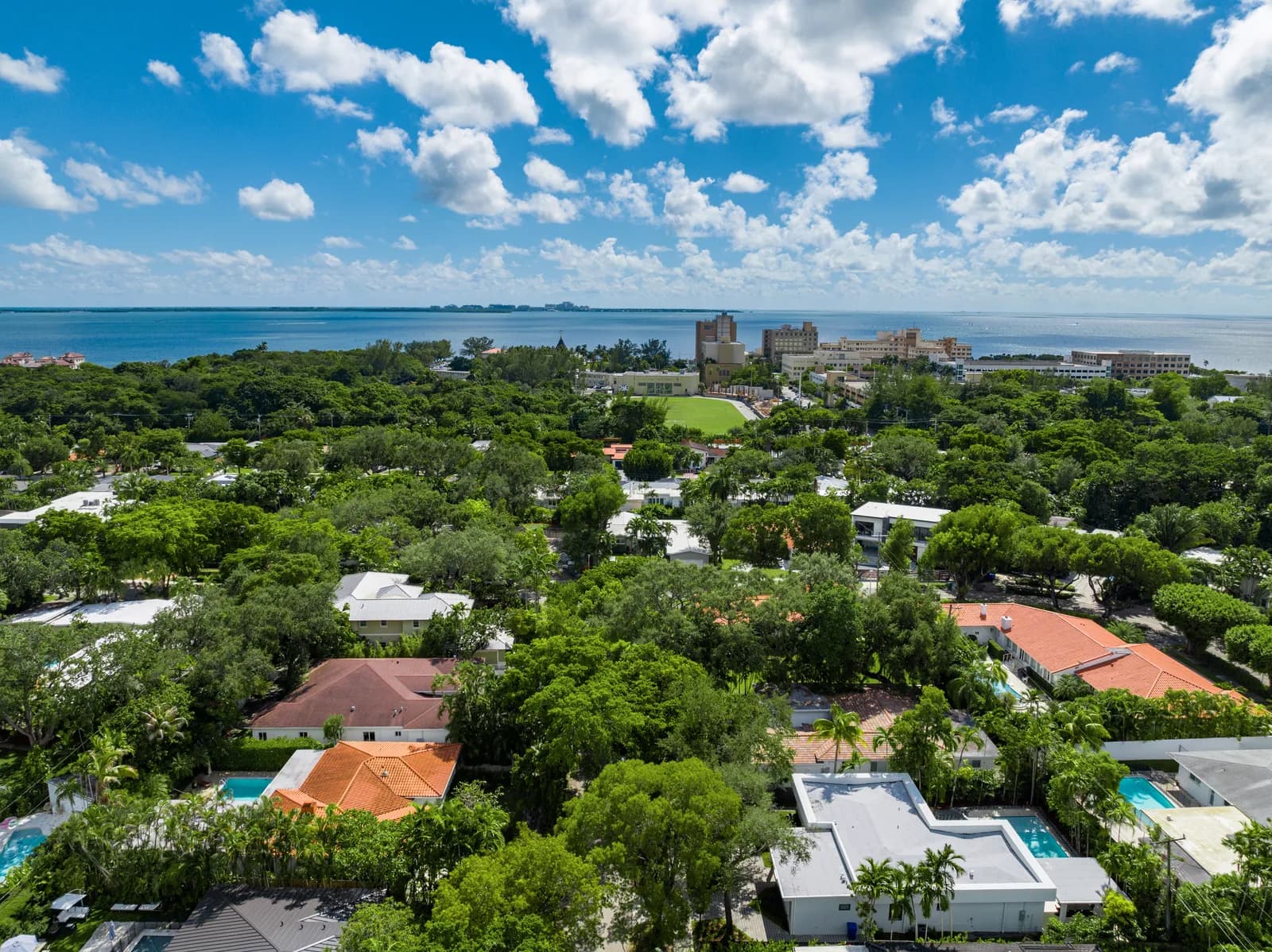
Same Land, Split Smart: Why One Lot Split Changes the Math
Two developers can buy the identical lot in Coconut Grove and walk away with two different deals. The difference isn't the house, it's whether the land gets split into two buildable sites or built as one.
Development · Jul 8, 2026 · 2 min
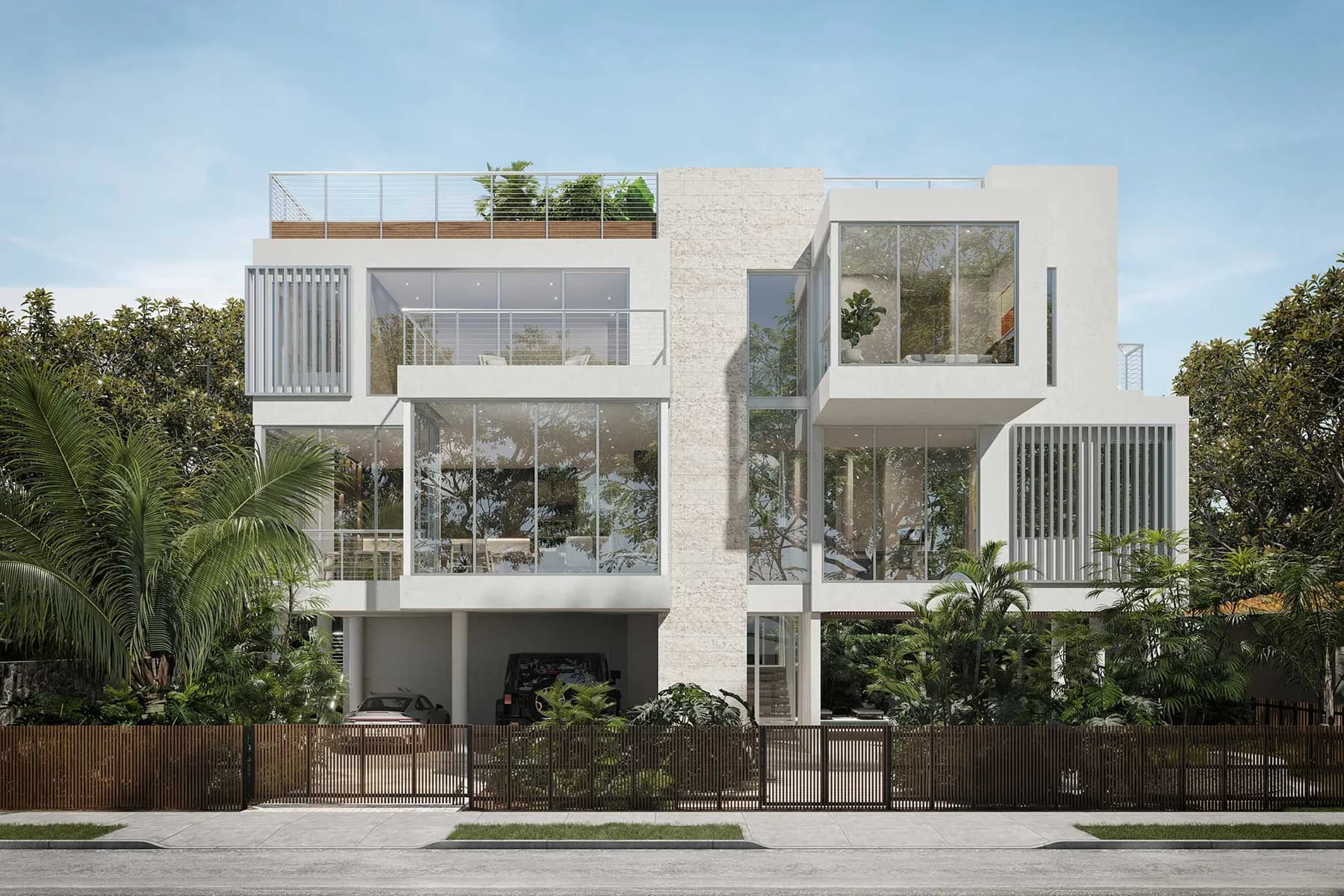
Where luxury developers actually make money
It isn't the house. The margin is decided the day you buy the land, and protected by everything you refuse to cheapen.