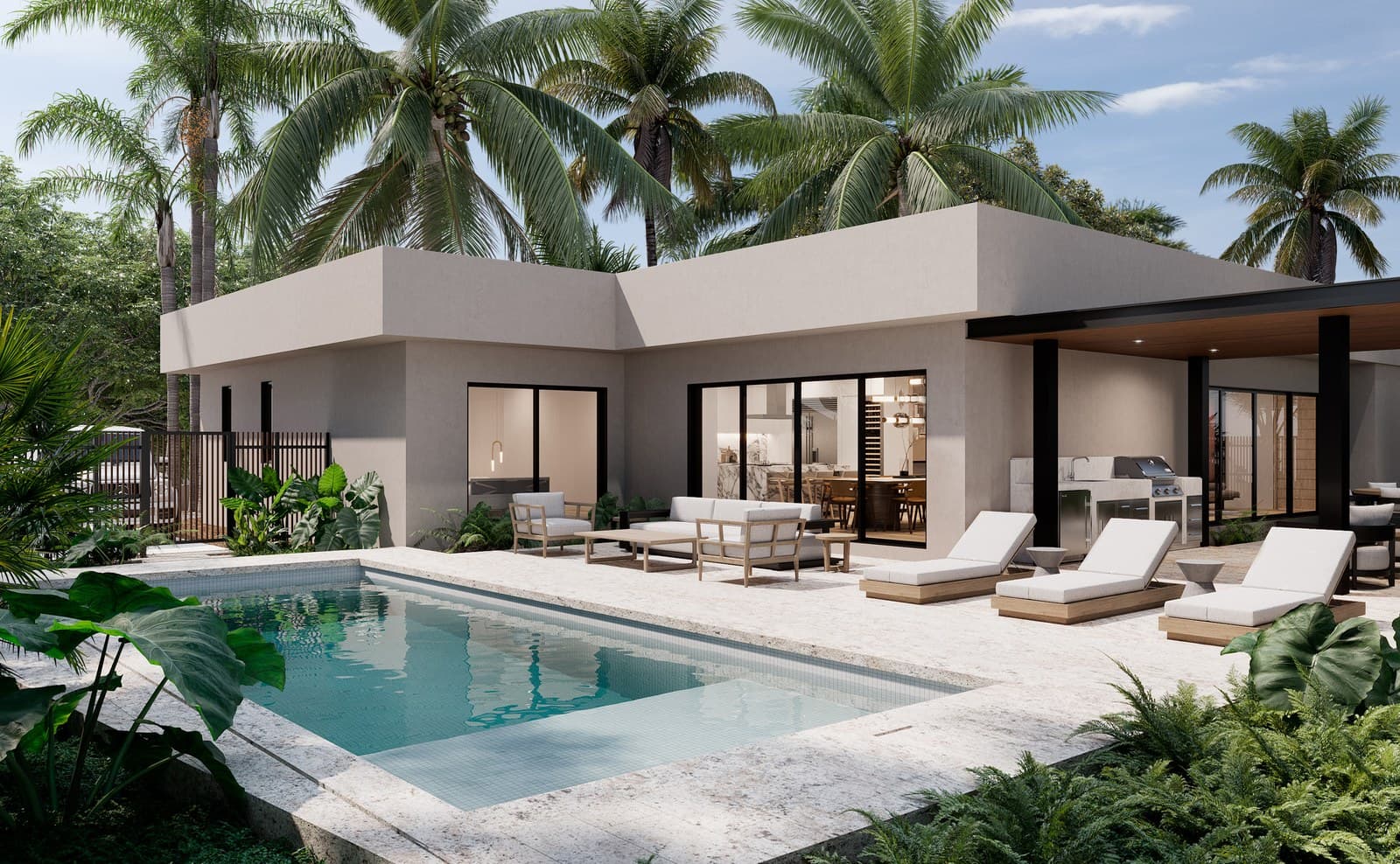
Four residences, four ways to live in Coconut Grove
Every Luxom home starts with a question: how do you want to live? Four residences in Coconut Grove, four distinct architectural answers. A closer look at what makes each one different.
Luxom Studio · LUXOM Developments
· 5 min read · Last reviewed
Key takeaways
- Each Luxom residence is designed around a way of living rather than a floor plan: the pavilion, the courtyard estate, the edge residence, and the waterfront apartment all start from a different premise about how a home should feel.
- Samana is built around travertine and open-pavilion architecture, where the line between interior and garden is deliberately soft.
- Onaway at 1616 Onaway Drive organizes life around a central courtyard, giving privacy and volume separation that a conventional layout cannot achieve.
- Ingraham at 4280 Ingraham is the largest of the four at 8,197 square feet, designed as a modern edge residence where scale is balanced by material restraint and a strong horizontal line.
- Grove Isle is the only waterfront property of the four, with direct Biscayne Bay views and the particular quiet of living on a private island within the city.
Four residences
The question the carousel asks is not rhetorical. Which residence would you live in? It is the first question we ask ourselves at the start of every project. Not how many bedrooms, not what the square footage is, but how do you actually want to live?
The four residences in this collection answer that question differently. One is organized around material and mood. One is organized around privacy. One is organized around scale. One is organized around water. All four are in Coconut Grove. None of them look or feel alike.
The travertine pavilion: Samana
Samana is built around travertine and the idea of pavilion living, the deliberate softening of the boundary between interior and garden. The material comes first: travertine in a honed finish, warm and matte, carried from the floors inside to the terraces outside without a threshold that interrupts the continuity. The pavilion logic follows from that, a structure that reads as much from the garden as from within it, where the ratio of glass to solid wall is weighted toward openness.
The mood it creates is calm rather than impressive. That is a deliberate choice. A pavilion does not announce itself. It settles into its site. The rooms are oriented toward the planted surroundings rather than away from them, and the materials, travertine, natural stone, warm timber in the details, age into the landscape rather than resisting it.
If you live best in a home that disappears into its setting and rewards quiet attention over time, Samana is the answer. For more on travertine as an architectural material and how it performs over decades, see our guide to travertine in the home.
The courtyard estate: Onaway
1616 Onaway is organized around an interior courtyard, and that organizational decision changes everything about how the house feels. Rooms face inward toward the planted court, which becomes the dominant view from most living spaces. The perimeter of the house faces the street and the neighbors. The interior of the house opens onto something private and green.
Courtyard architecture solves problems that conventional layouts do not. Privacy without fortress walls. Separation of volumes, sleeping from living from service, without long corridors. Natural ventilation through the court. Light in rooms that a linear plan would leave dark. The result at Onaway is a residence that feels generous and calm from within while presenting a composed, relatively closed face to the street.
It is the architecture of households that value the interior life of the home over the view from outside it. The family that gathers in the courtyard rather than on a front terrace. Sam Bissu's reasoning is straightforward: a courtyard gives you a private garden without a garden that the street looks into.
The edge residence: Ingraham
At 8,197 square feet, 4280 Ingraham is the largest of the four. The design logic is modern and horizontal, a strong edge line carried across the facade, with volumes that step and recede rather than stack. At this scale, the risk is that a house becomes a statement rather than a place to live. The restraint that keeps that from happening at Ingraham is material: a palette of concrete, natural stone, and glass that lets the scale read without decoration, without ornament added to justify the volume.
The program is organized for a household that needs room to spread: generous public spaces for entertaining, private volumes that are genuinely separate from the social floors, and circulation that does not feel like walking through corridors. Simon Bissu's approach to the structural decisions here was to let the horizontal line do the architectural work rather than adding gesture. The result is a residence that earns its square footage rather than filling it.
For the design language that governs interiors at this scale, see our piece on warm minimalism, which describes the approach behind residences where volume and restraint have to coexist.
Pull quote
The right residence is not the largest or the most loaded. It is the one that fits the way you live when you are most yourself.
The waterfront apartment: Grove Isle
Grove Isle is a private island off the Coconut Grove shoreline, connected to the mainland by a single causeway, and living there has a quality that no inland address replicates. The apartment there is organized entirely around Biscayne Bay, which is the dominant feature in every room that warrants it. The scale is different from the three houses above: tighter, more edited, designed to make the most of position rather than footprint.
This is the residence for the buyer who wants the waterfront to be unavoidable, not a feature but the premise. Morning light on the bay. The boats moving. The city close enough to reach easily, far enough to be quiet.
Margaret Bissu's interior approach at Grove Isle was to strip everything back to the view, using materials that recede rather than compete: light stone, linen textures, almost no color that fights the quality of the water outside. The apartment does not try to match what is beyond the glass. It frames it.
Choosing the one that fits
The answer to which residence you would live in is not about preference for one architecture over another in the abstract. It is about how you spend your days, what you need a home to hold, and what you want it to feel like when you walk in at the end of one.
If you are drawn to the warmth of natural stone and a home that opens to its garden, that is Samana. If what you want is privacy and a home that organizes life inward around a planted court, that is Onaway. If you need volume and a modern horizontal edge and a residence built for a full household, that is Ingraham. If you want the waterfront to be the point, that is Grove Isle.
All four are available to explore on the projects page. If you want to talk through which makes sense for how you live, or to understand what is in development beyond these four, reach us through the contact page.
Pull quote
The right residence is not the largest or the most loaded. It is the one that fits the way you live when you are most yourself.
Filed under
Questions about luxury residences Coconut Grove Miami
01What types of luxury residences does Luxom build in Coconut Grove?
Luxom builds bespoke single-family residences and curated apartments in Coconut Grove, each with a distinct architectural identity. Our portfolio includes pavilion-style homes that emphasize indoor-outdoor flow, courtyard estates built around privacy and landscape, large-format edge residences designed for families who want both volume and material restraint, and waterfront properties on Grove Isle with direct Biscayne Bay views. None follow a standard floor plan. Each starts with a conversation about how the buyers want to live. To see what is currently available or in progress, start at the projects page.
02What makes Coconut Grove different from other Miami neighborhoods for luxury real estate?
Coconut Grove is Miami's oldest neighborhood and one of its most distinctive. The canopy of mature trees, the proximity to Biscayne Bay, the walkable village feel, and the relative quiet set it apart from the more vertical corridors elsewhere in the city. It attracts buyers who want a real neighborhood and who value land, landscape, and the scale of a private home over amenity packages. Development here tends to be lower-density and more architectural than what you find in Brickell or Edgewater. For a broader view of the design decisions that make a Coconut Grove home work, see our guide to modern luxury interior design.
03What is a courtyard house and why does it work in Coconut Grove?
A courtyard house organizes its program around an interior outdoor space rather than a linear floor plan. Rooms face inward toward the court, which acts as a private garden, a source of light, and a naturally ventilated organizing space open to the sky. The effect is a home that feels calm and self-contained even on a lot surrounded by neighbors, because the primary view from most rooms is the planted courtyard rather than the street or the fence line. We build courtyard residences in Coconut Grove because the lots and the tropical light support them, and because the lifestyle they create, private, spatially generous, with a strong relationship between interior and garden, holds up over time in a way that more conventional layouts do not.
04How much does a new construction luxury home in Coconut Grove cost?
New construction luxury residences in Coconut Grove range widely depending on size, position, and specification. Single-family custom homes in the neighborhood consistently transact above three million dollars, and larger estates or waterfront properties trade significantly higher. The 2025 Miami market saw consistent demand at the top end, with individual transactions above ten million dollars occurring in meaningful numbers throughout the year. For Luxom residences specifically, pricing reflects the full scope of what is built into the home, including materials, structural decisions, and finishes. Reach us through the contact page for a direct conversation about what is available or in development.
05What is Grove Isle in Miami and why do people want to live there?
Grove Isle is a private island community in Biscayne Bay, connected to Coconut Grove by a single causeway. It is one of the quietest addresses in Miami: close enough to the Grove to reach restaurants, the marina, and Coco Walk on foot or by a short drive, far enough from the mainland to feel genuinely removed from the city's pace. Properties on Grove Isle sit with unobstructed bay views and a level of waterfront access that is rare within Miami proper. Our waterfront apartment there was designed to make the most of that position, with the bay as the dominant feature of every room that warrants it. For more on detailing water-facing rooms, see our piece on designing the spa bathroom at home.
Explore the portfolio
Projects to see


Talk to the studio
If this belongs in your home, our studio will draw the plan.
Initial conversation, 30 minutes. We listen to the brief and respond with a scoped proposal within five working days. You can also read the services page for typical timelines and fees.
Written by Luxom Studio · LUXOM Developments
The design and development studio behind LUXOM residences in Coconut Grove, Miami
Keep reading
From the journal
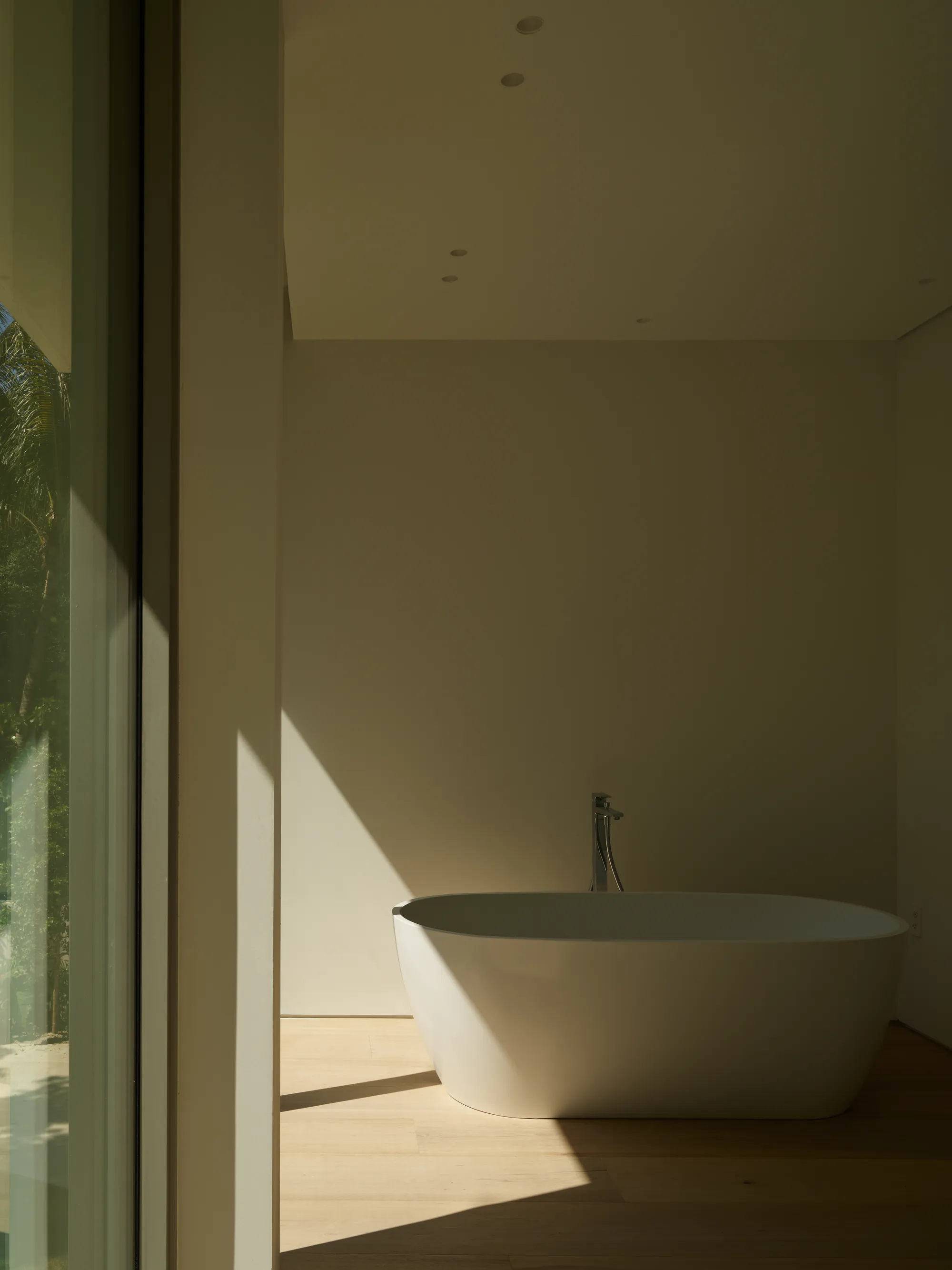
Materials · Aug 2, 2026 · 4 min
Travertine in the bathroom: warmth underfoot
Why travertine has become the bathroom stone of choice: the warmth it brings underfoot, how it handles water, and how to seal and care for it so it lasts a lifetime.
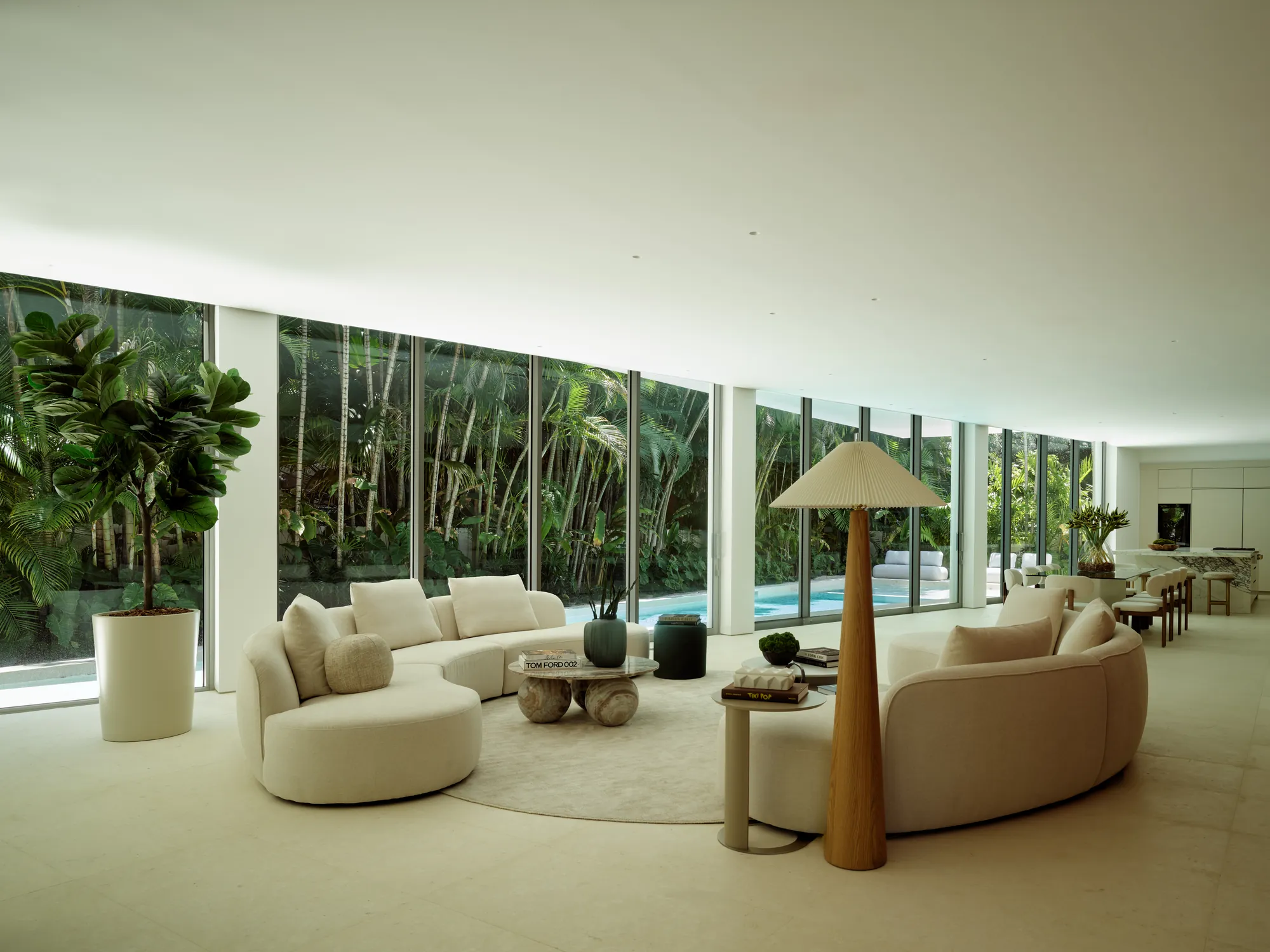
Interiors · Aug 4, 2026 · 4 min
Modern luxury interior design: defining the language
Modern luxury is one of the most used and least defined phrases in interiors. What the language actually is, the principles behind it, and how it differs from the version sold in showrooms.
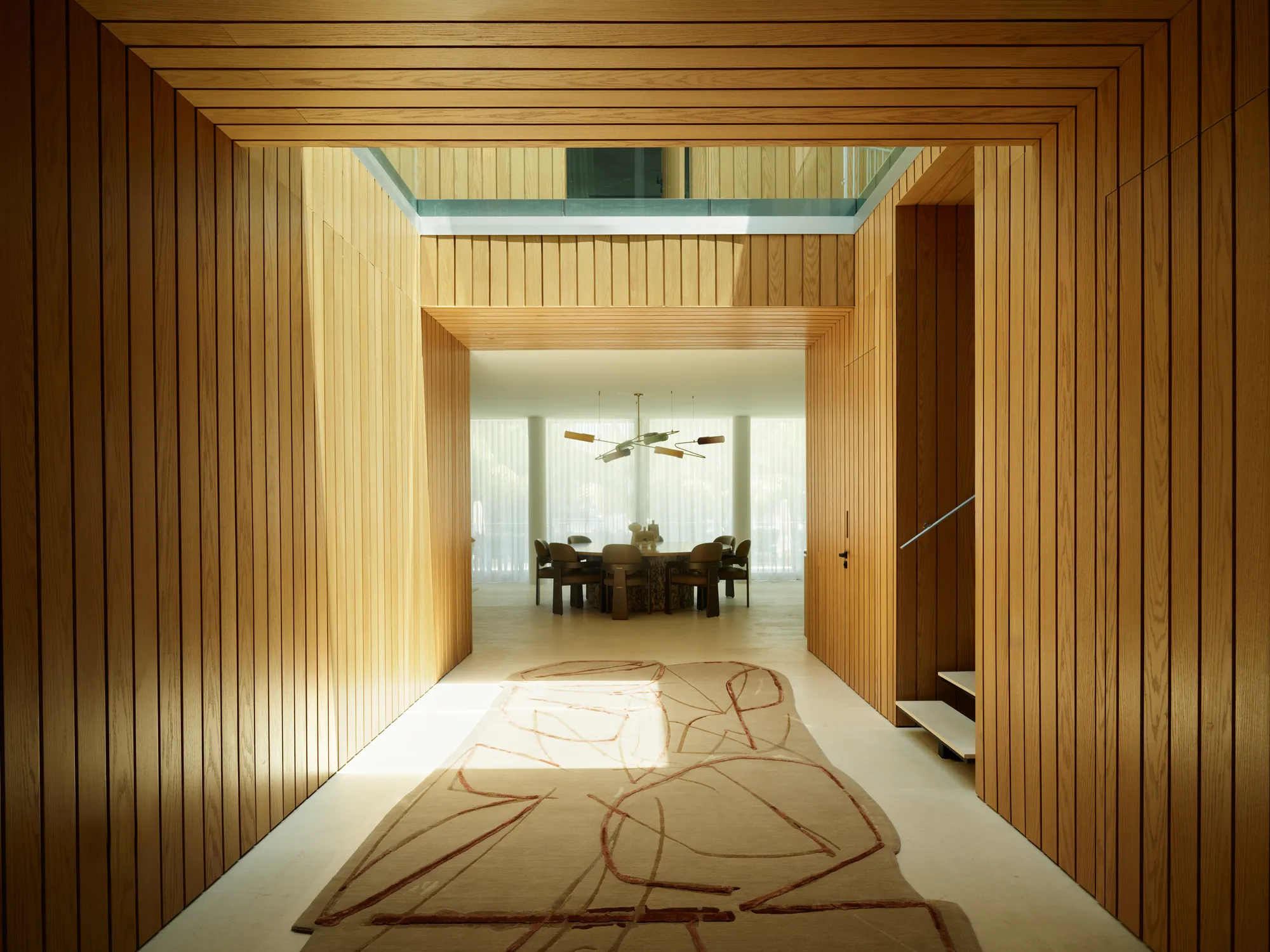
Interiors · Jul 12, 2026 · 3 min
Warm minimalism: luxury without the cold
The branch of minimalism that keeps the calm and loses the chill. How material, light and texture turn a spare room into one you want to stay in.